
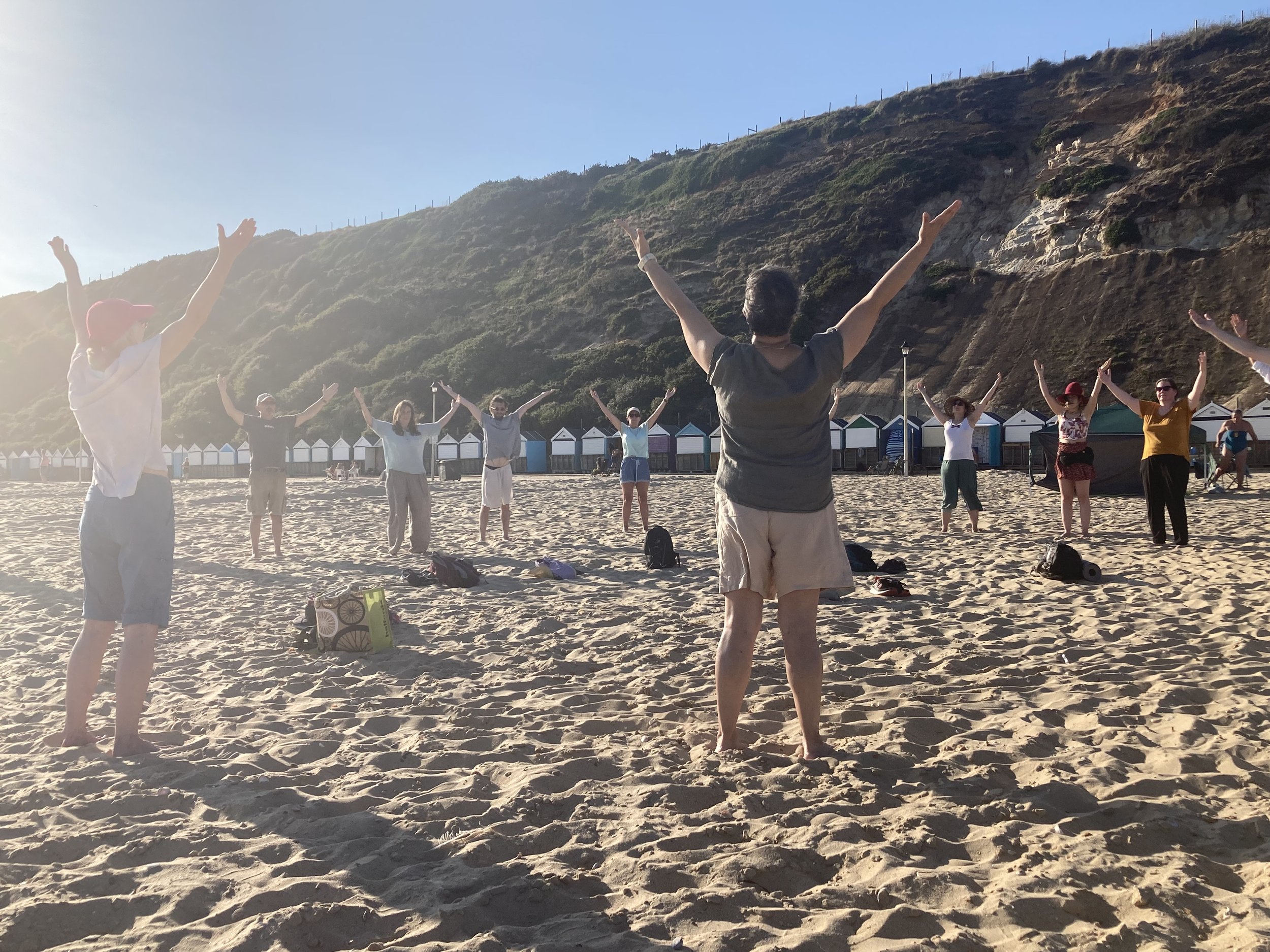
What is Qigong?
Ancient Chinese practice for modern life: gentle movement, breath, and meditation accessible to everyone
A Practice of Energy, Balance, and Presence
Qigong (pronounced "chee-gong") is an ancient Chinese practice combining gentle movement, breathing, and meditation. Think of it as moving meditation — gentler than yoga, more meditative than tai chi, and accessible to everyone regardless of age or fitness level.
The term Qigong comes from two Chinese words: qi (pronounced 'chee'), meaning energy or life force, and gong, meaning work or cultivation. So simply put, Qigong is the cultivation of life energy.
While often associated with physical postures and movements, Qigong is more than just exercise. It encompasses meditation, visualization, and reflection, all aimed at cultivating qi — the vital energy that flows through every living being. Qigong has been used for centuries for medical, martial, and spiritual purposes, and today it offers a pathway to greater balance, vitality, and inner peace.
The Roots of Qigong
The philosophy behind Qigong is steeped in Taoism, where people closely observed the cycles of nature: planting and harvesting, growth and decay, the changing seasons. This deep connection to natural rhythms influenced their understanding of balance and interconnectedness. An early precursor of modern Qigong is Daoyin, dating back to 200 BCE, which focused on exercises, breath control, and meditation to support harmony with nature.
As the Tao Te Ching wisely states:
"What is rooted is easy to nourish.
What is recent is easy to correct.
What is brittle is easy to break.
What is small is easy to scatter.
Prevent trouble before it arises.
Put things in order before they exist.
The giant pine tree grows from a tiny sprout.
The journey of a thousand miles starts from beneath your feet."
This ancient wisdom underlines the importance of cultivating balance and harmony from the ground up — and Qigong is a powerful tool for doing exactly that.
What Are the Benefits of Qigong?
Regular qigong practice can support:
Better balance and coordination — strengthening stability and body awareness
Reduced stiffness and improved flexibility — gentle movements that work with your body
Calmer mind and clearer thinking — soothing the nervous system and reducing mental noise
Better sleep and sustained energy — regulating your body's natural rhythms
Reduced stress and anxiety — dissolving tension and promoting deep relaxation
Stronger connection to your body and breath — learning to listen to what you need
A sense of peace and wellbeing — grounding you in the present moment
Qigong harnesses the power of the mind, intention, and simple movements to bring balance and harmony to both body and spirit. It teaches you how to manage your energy — boosting it when needed and calming it when necessary. It can help dissolve tension, promote healing, and improve overall vitality.
But beyond the physical benefits, there's something about the practice itself — the way it asks you to slow down, pay attention, and simply be present — that people find deeply restorative. Many students say it changes not just how they feel in their body, but how they meet the rest of life.
What to Expect in a Qigong Class
If you're considering joining a qigong class in Bournemouth, Christchurch, or Boscombe, you may wonder what to expect. With thousands of different styles and forms, the approach to Qigong can vary significantly.
In my classes, I aim to offer a space that is both playful and contemplative, drawing inspiration from nature, philosophy, and the wisdom of ancient practices. You can expect:
Gentle warming exercises to awaken the body
Dynamic flowing movements to cultivate energy
Static standing postures to build internal strength
Guided meditation and breathwork
Seasonal themes connecting you to nature's rhythms
Rich imagery and metaphor to deepen your experience
I weave in reflections on the season, the elements, and other ways to connect with nature's cycles. Through this, I invite participants to listen to their bodies, allowing the practice to become a deeply personal experience.
Qigong is often a non-verbal practice, and it is not about perfection or performance. Instead, it's about feeling your energy, sensing your body, and nurturing a deeper connection between mind, body, and spirit. You'll learn the traditional forms, then be invited to explore and adapt them in ways that feel right for your own body.
How to Practice Qigong
Qigong doesn't require fancy equipment or gear. All you need is:
Comfortable clothing that allows you to move freely
A quiet space (indoors or outdoors)
A willingness to be present and curious
You don't need a mat, props, or any previous experience. Just your body and the intention to connect with your energy.
While the benefits of Qigong are clear, the true magic happens when it becomes a regular part of your life. Consistency in practice is essential to unlocking its full potential. Even 5 minutes a day makes a difference — whether it's a quick morning session to start your day or a more expansive evening routine. Think of it as an investment in your health that pays off in long-term benefits. I find that even 5 minutes whilst making a cup of tea can help.
How is Qigong Different from Yoga or Tai Chi?
This is one of the most common questions I hear from students in Bournemouth and Christchurch exploring these practices for the first time.
Qigong vs Yoga:
Both practices involve mindful movement and breath, but yoga originated in India and often includes more physical stretching and strengthening postures. Qigong is generally gentler, with more emphasis on energy cultivation and less on physical flexibility.
Qigong vs Tai Chi:
Tai Chi is actually a martial art (Taijiquan means "Supreme Ultimate Fist") that includes qigong principles. While Tai Chi has real martial applications, qigong focuses purely on health, vitality, and energy cultivation. If you're looking for a gentler, more meditative practice, qigong is often the better starting point.
Read my full guide on the difference between Qigong and Tai Chi →
Frequently Asked Questions
Is qigong hard to learn?
No — qigong is designed to be accessible. The movements are gentle, flowing, and can be adapted to any fitness level or physical condition. There's no "perfect" way to do it; you work within your own range of motion and ability.
Do I need to be flexible?
Not at all. Qigong is about energy cultivation and awareness, not physical flexibility or strength. You move in ways that feel comfortable and sustainable for your body.
How often should I practice?
Even 5 minutes a day makes a difference. Consistency matters more than duration. Many students start with 10-15 minutes a few times a week and gradually build from there.
Is qi real?
The concept of qi may sound mystical, but it's actually very practical. Qi is often compared to prana in yoga — the life force that flows through all living things: plants, animals, and humans. While it's difficult to measure scientifically, we can sense our energy through how we feel physically, mentally, and emotionally. Just as we can feel the difference between a calm, quiet place and a noisy, chaotic one, we can also sense shifts in our own energy.
Can I do qigong if I have health conditions?
Yes. Qigong is particularly suited to people managing chronic conditions, pain, mobility issues, or recovering from illness. The gentle nature of the practice makes it safe for most people, though you should always consult your doctor if you have specific concerns.
What should I wear?
Wear comfortable, loose-fitting clothing that allows you to move freely. No special equipment needed — just comfortable clothes and bare feet or soft shoes.
I'm a complete beginner — where do I start?
Perfect! Qigong is ideal for beginners. My classes in Christchurch and Boscombe welcome people at all levels, with no previous experience required. I guide you step by step through the movements and make everything accessible and achievable.
Where can I try qigong in Bournemouth?
I offer accessible qigong classes in Christchurch and Boscombe, welcoming all ages, all levels, and people managing health conditions. Classes combine traditional forms with seasonal themes, rich imagery, and space for your own exploration.
Ready to Begin Your Qigong Practice?
Qigong is accessible to everyone, regardless of age or fitness level. It doesn't require years of training to experience its benefits, and the practice can be adapted to fit your personal needs and body.
Whether you're seeking relaxation, energy, emotional balance, or a deeper connection to yourself and nature, qigong offers a gentle and powerful pathway.
Curious to experience the benefits of qigong for yourself? Explore my upcoming classes and join a supportive, welcoming community in Bournemouth.
View My Classes →
Read More Articles About Qigong →
Contact Me With Questions →
I teach qigong and yoga in Bournemouth, with regular classes in Christchurch and Boscombe. My approach blends traditional forms with rich imagery, seasonal themes, and space for personal exploration. All levels welcome.