
How We Greet the earth
Movement, Nature, and What We May Have Forgotten
Before a performance begins in many traditions of Indian classical dance, the dancer pauses. Hands together, they move through a sequence of gestures before bending to touch the earth. They are seeking permission from the earth for stamping their feet upon her, and offering respect and love for bearing the weight of the dance. The gesture is called Bhumi Pranam — salutation to the earth — an acknowledgement of Bhūmi Devī, the earth goddess, before a single step is taken.
I learned this as a child, studying Indian classical dance alongside ballet. Two completely different ways of telling stories through the body — one reaching skyward, defying gravity, aspiring toward something ethereal and weightless; the other rooted, expressive, feet in open conversation with the ground. I didn’t study either for long. But the Bhumi Pranam stayed with me. The idea that before you move, you acknowledge what you’re moving on.
My grandmother understood this too, in her own quiet way. Before she set foot on the floor each morning — before she even stepped out of bed — she would pause. Then place her feet on the ground with awareness. Sometimes in gratitude. Sometimes in that gentle asking for forgiveness. In the part of India where she grew up, this was an old and understood practice. A daily acknowledgement that the earth is sacred, that to walk upon her is a kind of privilege, and that we might do so with awareness rather than without thinking.
I find myself returning to both of these images lately, because they point to something I think we have, in much of modern life, quietly lost.
A thread that runs through cultures
This way of meeting the earth is not particular to India.
In Buddhist iconography, one of the most arresting images is the moment of the Buddha’s awakening. He has sat under the Bodhi tree through every distraction and disturbance. And at the moment of enlightenment, he reaches down — not up — and touches the earth. He calls it as witness. “I was here. The earth knows.” The earth as conscious presence. The earth as the one who can confirm what has happened.
In the Chinese cosmological framework that underlies Qigong and much of traditional medicine, the human being is understood as standing between heaven and earth — not as a figure of speech but as a lived, physical reality. Earth below, sky above, the body as the bridge. Our feet root down; the crown of the head rises toward heaven; breath moves between the two. We are not visitors to the natural world. We are the point where its forces meet.
Many indigenous traditions understand the natural world not as scenery or resource, but as kin — something we are in relationship with rather than separate from. Reciprocity sits at the centre of this worldview: a recognition that taking also asks something of us in return.
Many people and societies hold worldviews that encompass kinship between people and nature — including many indigenous and rural cultures, and many who subscribe, even partly, to notions of Mother Nature, Mother Earth, or Gaia. This is not a niche or alternative perspective. Across much of human history, it has been the dominant one.
What shifted — and what we lost
Over time — particularly through industrialisation and modern capitalism — many societies increasingly came to treat nature as something external to us: a resource to manage, extract from, or escape into occasionally.
This is the framework many of us in the modern West have inherited, largely without noticing. Nature as backdrop. Nature as resource. Nature as the place we go to recover from real life.
I think of ballet here — that beautiful, extraordinary art form whose entire aesthetic is the transcendence of earthly weight. The pointed foot. The elevation. The body made to look as though gravity is optional. There is nothing wrong with this. But it is a particular story about what the body is for, and what our relationship to the ground might be. It is almost the opposite of the Bhumi Pranam.
Beyond market-based and instrumental values, researchers are now arguing for what they call relational values — a caring attitude toward nature that goes beyond what it provides, and recognises the significance of reciprocity in human–nature relationships. The fact that this needs to be argued for — that it requires academic papers and policy frameworks to make the case — tells us something about how far we have travelled from what the dancer knew before the first step, what my grandmother knew before her feet touched the floor each morning.
We have gained a great deal from our capacity to study and quantify the world. But something has also slipped through our fingers.
What the science does tell us
The research on nature and human health is, at this point, substantial — and worth knowing, not least because it gives us language that opens doors.
Spending time in green and blue spaces reduces stress, improves mood, and supports emotional wellbeing. Simply being in the presence of nature has been found to regulate physiological functioning — decreasing stress responses such as heart rate and blood pressure. Evidence suggests that more than 120 minutes a week in nature is associated with the best possible physical and mental health and wellbeing.
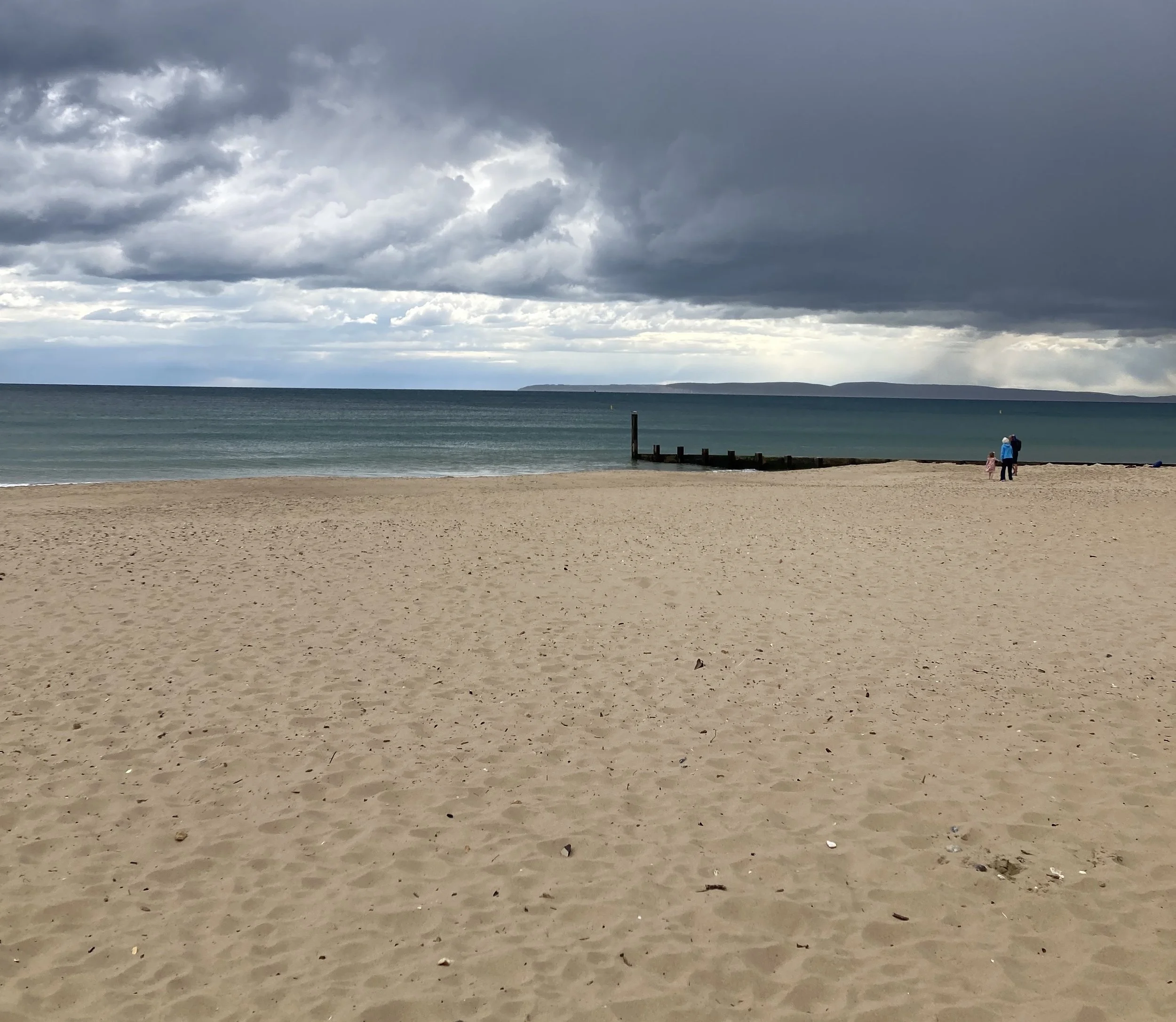
Blue spaces — coastal and water environments — are particularly compelling. A 2020 study found that being near, in, on, or under water for any amount of time lowers stress and anxiety, boosts wellbeing and happiness, and lowers heart and breathing rates. A UK study tracking 20,000 people’s environments and sense of wellbeing found that those in marine or coastal areas were significantly happier than those in urban settings. Living near the coast appears to have general mental health benefits, with evidence that people living near or with views of the sea experience lower psychological distress.
When we move our bodies outdoors rather than in, something additional happens. Multiple meta-analyses have reported consistent positive effects of green exercise — movement in natural environments — on mental health outcomes. The combination of movement and nature appears to do more than either alone.
All of this is real and valuable. And yet — reducing the importance of nature to only instrumental and monetised value is not reflective of the largely intuitive ways people make decisions, understand the world, and decide what is right.
The research describes effects. It doesn’t quite reach the relationship.
What a practice can restore
When we practise outdoors — on the beach, in a park, in a garden — something shifts that isn’t fully captured by cortisol measurements and mood scores. The ground beneath us isn’t a mat or a studio floor. It’s actual earth. The light changes. The breeze moves through us. And somewhere below the thinking mind, the body remembers something it can forget indoors: that it is a living thing, in a living world.
This is what the dancer knows before the first step. What the Buddha confirmed at the moment of awakening. What Qigong makes explicit in every stance — earth below, heaven above, and here, in between, a human being breathing.
And what my grandmother enacted, quietly, every morning. Not as spiritual practice with a capital S. Just as ordinary acknowledgement. A pause before her feet met the floor. A recognition of what is always, already, there.
Recently I’ve begun bringing a version of this into my yoga practice and my yoga classes — a simple, unhurried moment at the start of practice to acknowledge the ground. Not a formal ritual. Just a pause. A flow. A placing of the hands. A recognition that before we move, we might notice what we’re moving on.
Perhaps remembering begins in very small ways: noticing the ground beneath our feet, the movement of air across the skin, the fact that we are not separate from the living world after all.
This summer I’m teaching on the beach and in the park as well as indoors. If you’d like to explore some of this through movement, breath, and attention, whether in yoga or Qigong, I’d love to have you join me.
Find class details and book here.