
What is Qigong Practice? Attention, Presence & Learning Not to Force
A simple introduction to qigong practice, and how it cultivates attention and ease in action.
Many people come to qigong looking for relaxation or wellbeing. While these can be natural by-products of practice, what becomes more significant over time is subtler: the cultivation of attention, and the ability to act without unnecessary force.
In a world that often feels fast, fragmented, and demanding, qigong offers a way of returning to something steadier: attention that is guided, and action that is not driven by strain.
This is where two key principles of qigong become especially relevant: Yi and Wu Wei.
What is Yi in qigong?
In qigong, we speak of Yi (意) most often translated as intention.
Yi is not forceful concentration or mental effort. It is a quiet, steady quality of awareness that guides movement from within.
You might think of it as a gentle thread of attention that leads the body, rather than controls it. A kind of inner direction that is both focused and relaxed at the same time.
When Yi is present, movement feels coherent and alive. There is a sense that the body is not simply “doing” the form, but listening to something subtler within it. When it is absent or scattered, movement can become mechanical. The shape remains, but the sense of presence fades.
How do we develop Yi? Through practice. The more we return, the more attention becomes steady, quiet, and embodied.
Wu Wei — the art of not forcing
Alongside Yi is the principle of Wu Wei, often translated as non-forcing or effortless action.
Wu Wei does not mean doing nothing. It means acting without unnecessary tension or resistance.
It is the difference between effort that is braced and strained and effort that is responsive and free.
In practice, this might look like allowing movement to unfold rather than pushing it into shape. Or noticing when we are trying too hard, and softening. Wu Wei is not something we can achieve through effort alone. It is something that emerges over time, as the body and mind learn to trust a different kind of intelligence — one that does not rely on control.
Why Yi and Wu Wei matter in modern life
Modern life often encourages constant doing, striving, and mental overload. Attention is pulled in many directions at once, and it becomes easy to lose a sense of inner coherence.
In this context, Yi and Wu Wei are not abstract concepts. They are practical skills.
Yi supports us in cultivating steady, embodied attention — a way of being present without tension.
Wu Wei supports us in recognising when we are over-efforting, and learning how to soften into action rather than force it.
Together, they offer a different rhythm:
less fragmentation
more coherence
less forcing
more responsiveness
How qigong practice develops these qualities
Qigong is a practice of repetition and return.
Through slow movement, breath, and awareness, we begin to notice how attention behaves in the body. Over time, something shifts:
attention becomes less scattered
movement becomes more integrated
effort becomes less forced
presence becomes more available
This is not achieved quickly. It is cultivated gradually through consistent practice.
Qigong as an art of the heart
Qigong is sometimes described as an art of the heart.
In Chinese, the word 心 (xīn) refers not only to the physical heart, but also to mind, feeling, awareness, and intention — a whole field of inner experience.
From this perspective, qigong is not only physical exercise. It is the cultivation of wholeness: body, breath, attention, and presence working together.
Yi and Wu Wei are part of this cultivation. They are ways of refining how we relate to ourselves and to action itself.
Beginning a qigong practice
Qigong is accessible to anyone, and no prior experience is needed.
A typical practice includes:
slow, mindful movement
awareness of breath
attention placed gently within the body
returning to simplicity, again and again
Over time, practice becomes less about doing the movements correctly, and more about how we are present within them.
Returning to attention
Qigong is not something to master. It is a way of returning — to attention, to breath, and to a more coherent way of being.
Yi helps us find direction without force.
Wu Wei helps us act without strain.
Together, they offer a simple but profound shift: from efforting our way through life, to meeting life with steadier presence.
An invitation to practise
If this way of working with attention and movement resonates, you are welcome to explore qigong in practice.
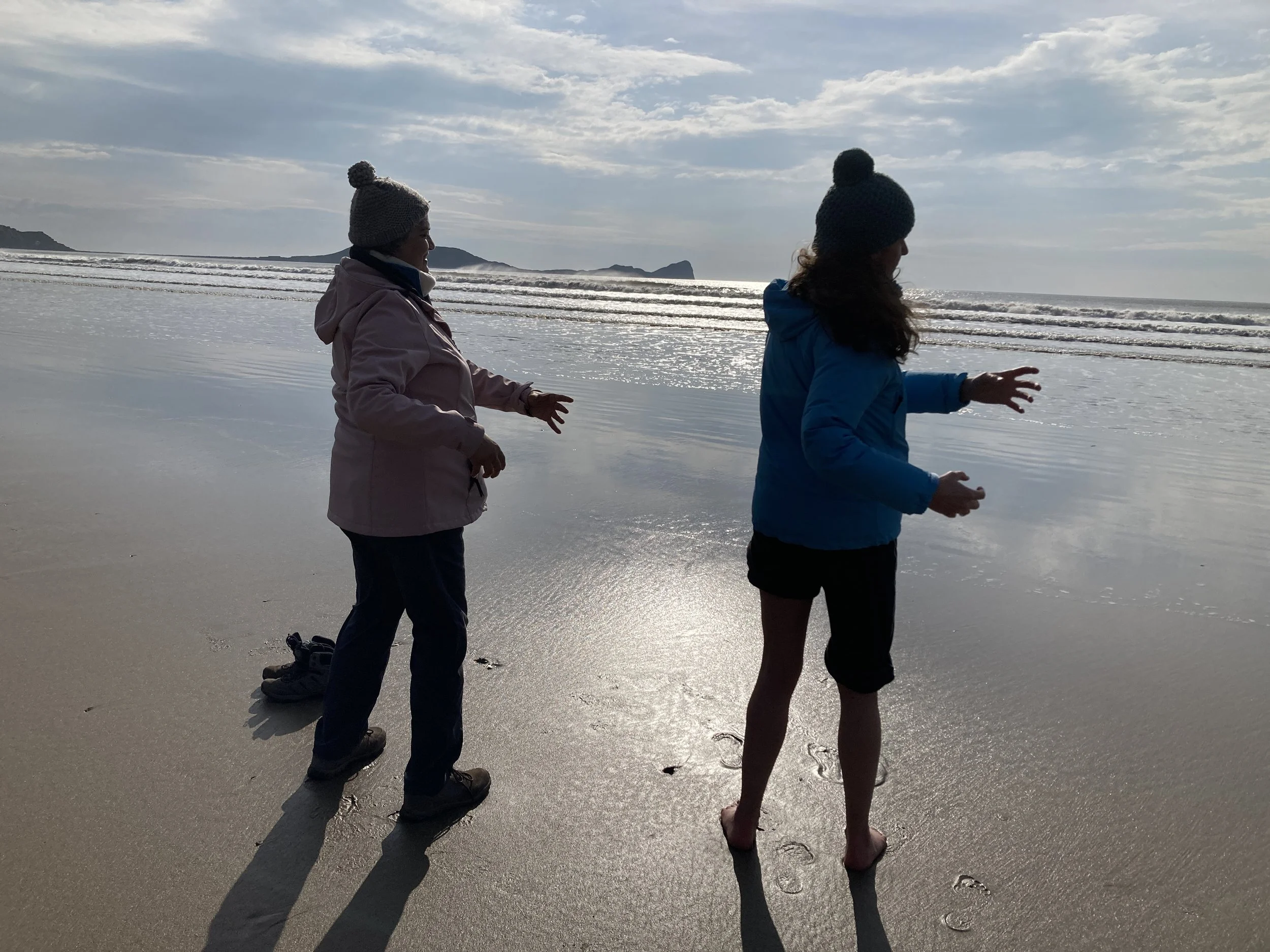
I teach regular classes in Bournemouth and Christchurch, as well as outdoor sessions in nature, including Beach Qigong on Boscombe Beach, where we work with breath, movement, and presence in a simple and accessible way.
Sessions are open to beginners and experienced practitioners alike.
→ You can find current classes and sessions here:
https://www.rakheejasani.com/my-classes