
Second Spring
There is a kind of unkindness built into the word itself. Menopause: a pause, a stopping, a full stop wearing the shape of a comma. Even before we get to the list of symptoms, the heat, the sleeplessness, the fog, the tears that arrive from nowhere, the name has already told us what to think. An ending. A withdrawal of something. And underneath that, if we are honest, an old and unspoken assumption: that a woman's meaning was bound up with her fertility, and fades when fertility does.
It is worth asking whether that story is even true, before we agree to live inside it.
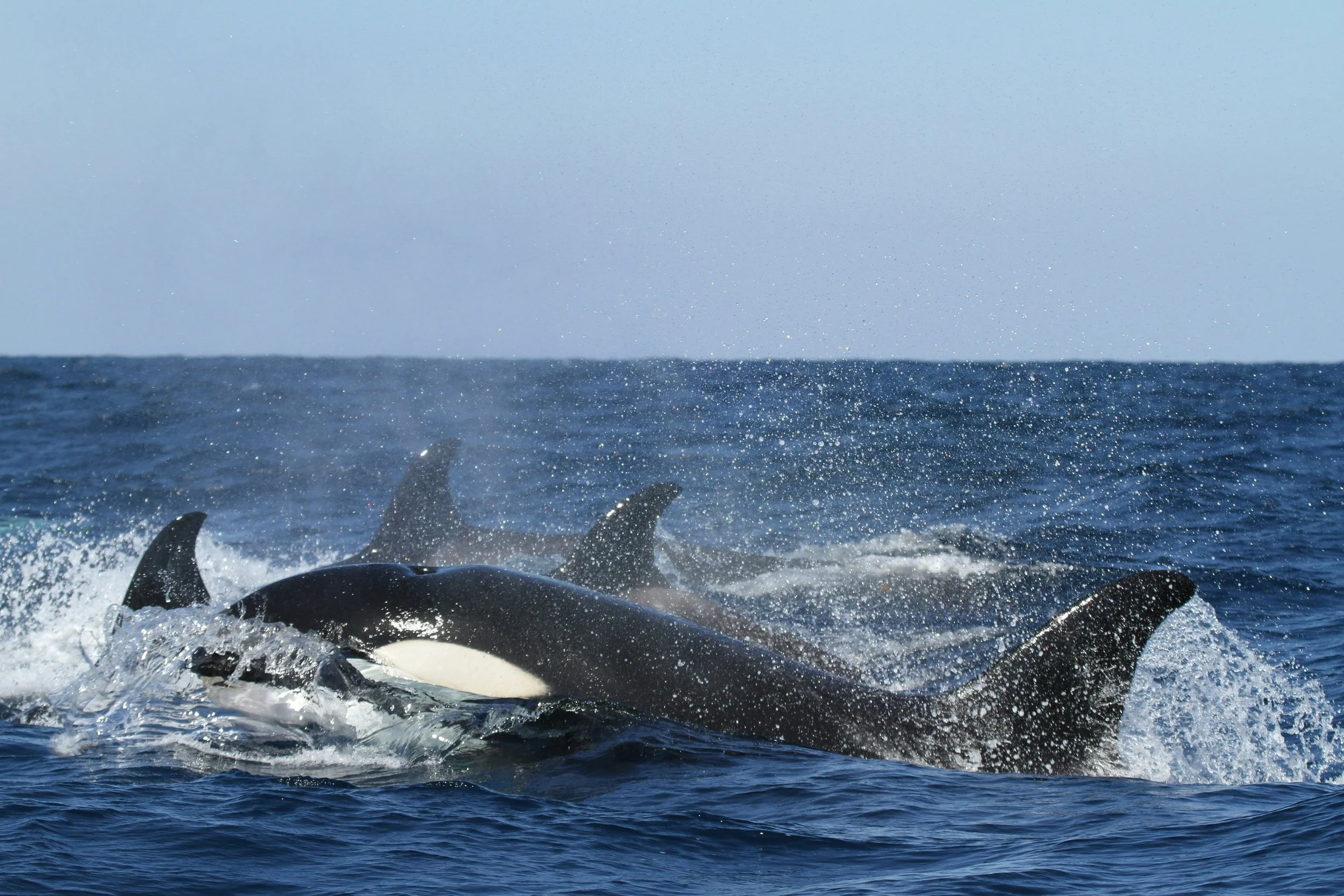
Here is one small, strange fact that unsettles it immediately. Humans are among the very few species on earth that live long past their fertile years. So do orca whales, one of only a small handful of other species known to experience anything like menopause at all. And in whale society, it is the matriarchs and older females who carry the group's wisdom, memory, and direction. Perhaps it is the same for us. Evolution does not usually keep something around for decades if it serves no purpose. Biologists have their own name for this puzzle: the grandmother hypothesis, the idea that women live so long past childbearing precisely because that time matters, because the presence, knowledge, and care of older women measurably improved survival for their daughters and grandchildren. Whatever this stage of life is, it is not a design flaw. It is not built to be discarded.
What other cultures already knew
In Japan, the anthropologist Margaret Lock's research into konenki, the Japanese word for this transition, found something quietly radical: women reporting far fewer of the symptoms so often assumed to be universal, and describing the whole passage not as an illness to endure but simply as a stage of growing older. Broader research across cultures suggest a recurring pattern: societies that don't measure a woman's worth by her fertility tend to experience this transition very differently to those that do. The negative story so many of us have inherited is not inevitable. It is, in part, a choice some cultures made, and others didn't.
In Chinese culture and Chinese medicine, older women have long been valued and, in many contexts, exalted. This stage of life is not read as a pause or an ending but as what is beautifully named the Second Spring. The energy that once flowed outward, into cycles, into fertility, into the rearing of the next generation, turns inward, becoming available for something else entirely. Not a smaller life. A redirected one.
What is actually happening: kidneys and liver
Chinese medicine doesn't leave this reframe floating as metaphor alone. It locates it in the body. Two organs carry the weight of this story, and neither means quite what it means in Western physiology.
The kidneys are understood as a reservoir: the place where the body's deepest, quietest store of energy is kept, drawn down gradually across an entire lifetime. The liver is associated with growth, movement, and the free flow of energy through the body, how easily we rise, expand, assert, become. When the kidneys' reserves are full, the liver has what it needs to grow steadily, upward, like something well rooted. When the reserves run low, that same growth can start to feel less like a rise and more like a spike, sudden, ungrounded, prone to flaring. This is one way of understanding what shows up as heat, restlessness, irritability, the sense of being at the mercy of your own body.
This isn't an abstract theory. The Suwen, part of the Huangdi Neijing, the foundational text of Chinese medicine and over two thousand years old, lays out women's lives in seven year cycles, and states plainly that at the seventh cycle, age forty nine, Kidney Qi begins to dwindle, Tian Gui (the essence underlying fertility) dries up, and menstruation ceases. This isn't a modern reframe applied retrospectively. It was written down as simply how a woman's life unfolds, long before anyone thought to call it a deficiency. The same text describes this not as loss but as a re-routing: energy once spent outward, through blood and through the raising of children, turning inward instead to nourish the heart, the mind, and long life. A shift, in its own words, from an outward, active kind of energy to a deep, inward kind of cultivation.
It is worth saying plainly: this isn't only a woman's story. Kidney energy is understood to decline in men too, across their own, more gradual rhythm. The same text maps men's lives in cycles of eight years rather than seven, without the single clear threshold that menopause marks for women. Ageing draws on the same reservoir, for all of us. Menopause simply makes visible, all at once, something that is quietly true for everyone.
The seasons as a map
Chinese Five Element theory offers a way of holding all this that never needs to feel clinical, because it is drawn straight from the natural world. Each season feeds the next, in an unbroken cycle. Autumn is a letting go, a harvesting inward, the trees pulling their sap back down into the roots. Winter is stillness, storage, and nourishment: everything quiet on the surface, gathering its strength beneath. Spring is what grows out of that very stillness, new, upward, alive, only possible because winter was allowed to be winter.
This is not a poetic flourish laid over the body afterwards. The body moves through its own version of exactly this arc. What autumn and winter and spring model, kidney and liver enact directly: a letting go, a replenishing, and only then, a new growth. Nothing grows well that hasn't first been allowed to rest.
The Suwen has a phrase for what winter asks of us that has stayed with me. It calls it "keeping a secret": quieting the mind, storing rather than spending, holding close rather than pushing outward. It goes further, too, with a piece of advice that sounds almost startlingly modern: not to let the skin perspire in winter, so that the body's deeper reserves aren't rapidly stolen away. In a menopausal body, prone to its own unwanted heat and sweat, that ancient caution about protecting what winter has stored feels less like folklore and more like instruction. Not withholding out of fear, but out of respect for what stillness is actually for. That is not a bad description of what this whole stage of life is asking too.
Water into wood
This is the practice I teach under that name: qigong that moves deliberately from replenishing to growing, in that order, on purpose.
It begins with arriving, gathering what feels depleted or ungrounded and letting it go, then gathering nourishment from all around and filling it in, sealing it into the body so it isn't lost. From there, slow, internal, water-like movement: rocking and swaying the way a tide moves, nourishing rather than working. This is the heart of the practice, and the one part that asks nothing effortful of the body. And only once that reservoir has been tended do we grow anything new: energy rising again, this time rooted in what has just been restored, rather than spiked and reaching for something it doesn't have.
None of this asks the body to fight its own symptoms into submission. It asks a quieter question: what if the heat and the restlessness are not the problem, but a request, for rest, for replenishment, for somewhere steadier to rise from?
Not decline. Wisdom.
We inherit a story that tells women this stage is an ending, and we rarely stop to ask whether that story serves us. Culture after culture that has looked past fertility as the sole measure of a woman's worth has found something else waiting on the other side of it: not depletion, but a different kind of energy, inward, deep, generative in ways that have nothing to do with childbearing at all. Wisdom. A different kind of strength. New community. A seed worth nurturing, precisely because the old growth has been allowed, at last, to rest.
Second Spring is not a consolation prize for an ending. It is what the whales seem to know, what old Chinese medicine mapped out two thousand years ago, and what so many women arrive at quietly, on their own, once someone finally tells them it was allowed all along: that there is a great deal of life, and a great deal of growing, still to come.