
Tending our sorrow
Grief, autumn and metal
Summer 2026 was difficult for many: heatwaves, wildfires, sudden losses, endless war, cost-of-living pressures, pessimism. Against this backdrop, an old American procedural resurfaced on Netflix and climbed into the top 10 of most streamed shows globally. There are many reasons for this - perhaps nostalgia, which itself has a strange relationship with grief: longing for something we had, or something we never quite had. At its heart, The Mentalist is a study of grief. There is something comforting about finding grief at the heart of an entertaining and familiar story. It gives us a way to think about the unthinkable, and to recognise some of the sadness and sorrow we may be carrying in our own lives. As we move into autumn we reach the metal phase in Chinese medicine and Qigong. The emotion of grief is associated with metal alongside an understanding of what we value most dearly.
autumn and the metal phase
Autumn gives us a language for this: leaves fall away, shortening days give rise to melancholy. The metal phase invites us to reflect on what we hold precious and appreciate, and to release what no longer serves. The lungs are the primary organ associated with this phase, and breath is something we can feel when sorrow catches in the chest, when words fail us or when we find ourselves holding our breath without noticing. Metal is also associated with the quality of courage: not courage as the absence of fear or sorrow, but the capacity to face what is here. There is a kind of refinement in this. Under pressure, something is distilled; what matters becomes clearer, just like the earth under pressure creates precious metals.
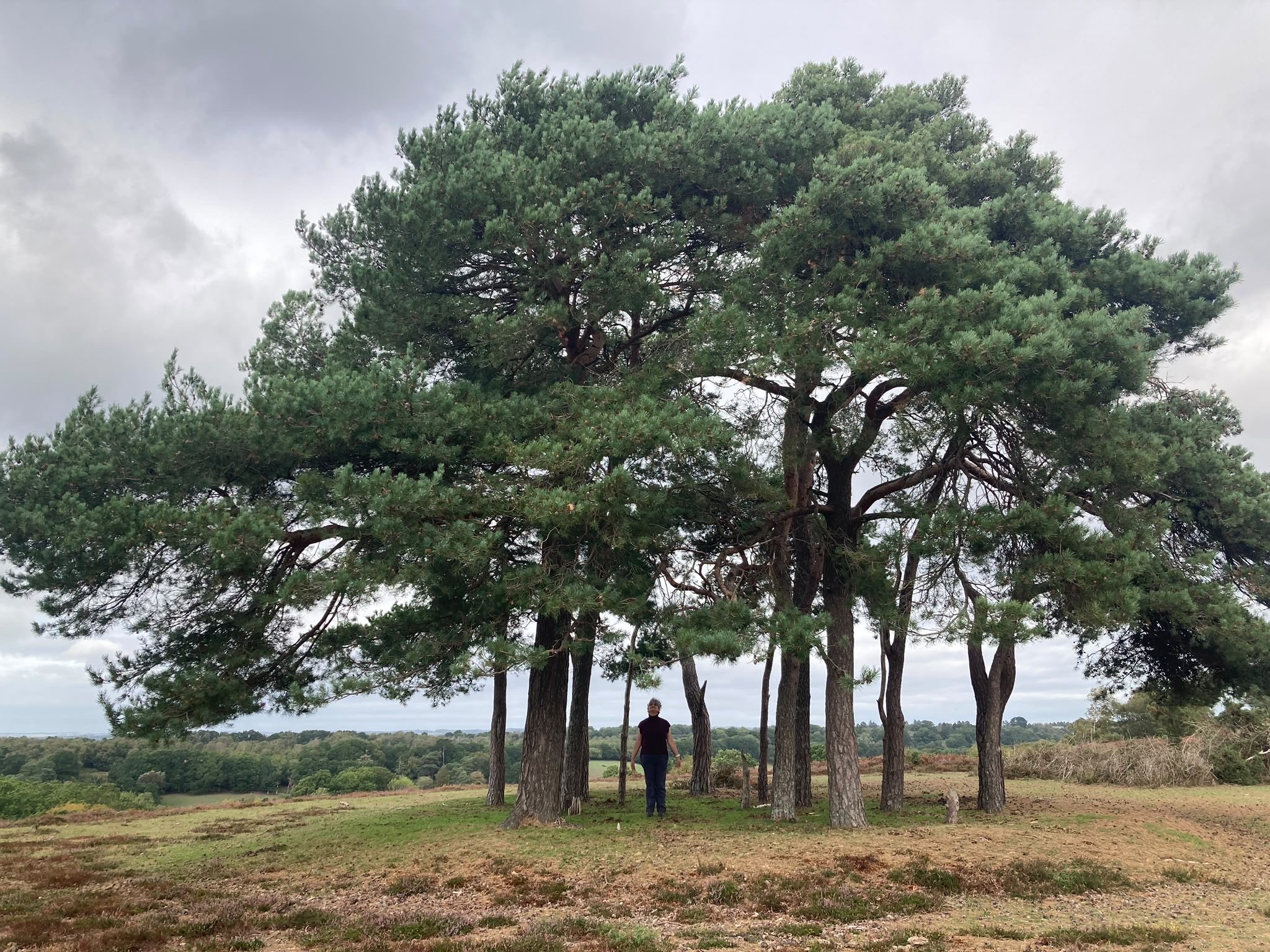
This is part of what autumn offers us. It doesn't ask us to manufacture sorrow, or to search for something to mourn. Sorrow is already part of being human. Autumn simply creates a landscape in which we can notice and honour it. The trees let go. The light changes. The world becomes quieter. There is less insistence on growth and more attention to what remains. As grief and sorrow become more clear to us, we begin to see them as an opportunity to recognise what matters.
The comfort of a story with a clear ending
This is also part of what makes The Mentalist so compelling: beneath the entertainment is the story of a man living with profound grief inside a world designed to contain disorder. Patrick Jane, the show's central character, lost his wife and young daughter to a murderer, and the unresolved loss sits beneath everything he does. Each episode offers the familiar satisfactions of a procedural: a mystery, clues, uncertainty, tension and, usually, a resolution. But Jane's own story cannot be resolved in the same way. No case can give him back what he has lost.
That tension may be why the show is so comforting at a time when so much of what we are exposed to feels uncontained: wars that continue without resolution, ecological loss unfolding over decades, economic uncertainty, and suffering that arrives through our screens without any clear ending. The world of the procedural gives us something our own lives often don't: a beginning, a middle and an end. Something happens, someone investigates, something is revealed, and the story closes. The programmes we return to again and again work in the same way: the garment finished by the final round of The Great British Sewing Bee, the pot lifted from the kiln on The Great Pottery Throw Down.
Maybe we sometimes seek out contained stories precisely because our own lives offer so little containment.
What, exactly, are we grieving?
Not all sorrow arrives with a reason we could explain to anyone else. It may be for something that seems too small to mention: a place that has changed, a season that has ended, a version of ourselves we have quietly outgrown. We may feel we have no right to it, that others have lost far more. But sorrow is not a competition, and it does not need a cause that satisfies anyone.
the many faces of grief
There are names for these quieter griefs, and it can help to hear them. Psychotherapist Francis Weller describes several gates through which grief enters a life, among them grief for the world around us, and grief for what we expected and did not receive. He also writes of ancestral grief. I think of this as the losses of those who came before us, the migrations, silences and hardships that were never fully mourned because there was no room to, and which can travel down a family as a heaviness we cannot quite account for. We may feel it and not know whose it is.
Sorrow can also be pushed aside by duty. When we are caring for someone, there is so much to do that our own sadness waits at the edge of the day, unattended, sometimes for years.
And there is the grief Pauline Boss calls ambiguous loss, where someone is absent but not neatly gone. Think of a parent with dementia: still here, at the table, still holding our hand, and yet in some way already leaving. There is no funeral for this, no clear moment when mourning is permitted to begin. Many people carry it privately, and feel guilty for grieving someone who is still alive.
It is allowed. We can grieve for a person who is still with us. We can feel love and exhaustion and sorrow, even relief, in the same breath. Two things can be true at once: I am glad you are here, and I miss you. Holding both is not a betrayal or a contradiction. It is what a truthful heart does with a situation that has no clean edges.
No wonder so many of us learn to look away from it.
What I have noticed is that as a society we tend to want to push past the moments when we feel sorrow. Joy is a whole different thing. That is something we cling to. And yet, surely both are deserving of our care, our attention, of noticing how our minds and bodies are responding to these states that we find ourselves in. And so, how do we tend our sorrow?
tending sorrow through practice
This is where practice can help. A story gives sorrow a shape from the outside, with a beginning, a middle and an end. A Qigong practice offers the same shape from within. We arrive and settle, and begin with the breath, noticing where it catches, where there is tightness or holding, without trying to change it. The body often knows something before the thinking mind has quite caught up. Then we open the arms and the chest, and let the out breath lengthen. If a sound wants to come with the exhale, we let it. We move slowly enough to notice what stirs. And then we close, the hands resting low on the belly, the body gathered back into itself. Nothing has been solved. But the sorrow has been given somewhere to move, and a way to end.
There is a principle I return to often in practice: seventy percent is enough. We don't need to force a stretch, deepen a breath or make ourselves feel better. Perhaps courage is simply the willingness to stay with what is here.
Perhaps sorrow reminds us that everything is fleeting: every thing, every moment, every emotion. Not as a reason to hold on more tightly, but as an invitation to pay attention while something is here.
What remains
Without giving away the ending of The Mentalist, Jane's grief does not simply disappear, but he begins to find a way to live alongside what he has lost.
Perhaps that is what tending sorrow means. Not fixing it or putting it behind us, but making enough space around it for life to continue.
Autumn reminds us that something can be released and something can remain. The leaves fall. The tree remains.
I explore the metal phase in my Qigong classes every autumn. If this is something you'd like to explore through practice, you'll find my current classes here.